Mostrando entradas con la etiqueta book. Mostrar todas las entradas

jueves, 28 de noviembre de 2013

MY HORIZONTAL LIFE, by Chelsea Handler

Títle: My Horizontal Life, A Collection of One-Night Stands
Author: Chelsea Handler
Year: 2005
Country: U.S.A. 

I was at the airport, strolling around the gates, trying to spend time without spending money, when I inevitably was drawn to a bookshop. If you can call it bookshop. It was just a few shelves with a few books and magazines, but you know me. Or at least I know me, and I knew that if I veered in that direction I'd end up buying something. But before I could stop myself I was already paging through a magazine, and that's when I found My Horizontal Life.


Here's a confession: I love Chelsea Handler in the same sick, shameful, guilty-pleasure way I love Joan Rivers. They are insanely dirty, inappropiate and hilarious. I just can't help burst out laughing when I see their shows. I can feel my brain cells cringe and die a little, but it's worth the laugh.

So when I saw this book it was out of the question I had to buy it.

It's divided very simply into a one-night-stand-experience per chapter, and I say experience because she doesn't always end up having sex. Some are hot, some are disgusting, all of them are awkward and super funny. I don't believe half of the things she says are true, but still they are hilarious stories. Incredibly inappropiate, but hilarious nonetheless.

This book won't make you smarter, but it's definately a good laugh.


lunes, 7 de octubre de 2013

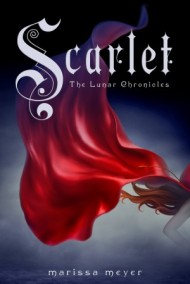
SCARLET, by Marissa Meyer

Title: Scarlet
Author: Marissa Meyer
Series: The Lunar Chronicles
Year: 2013

(I apologize in advance, in the end I loved the book, but this is a rant!)

Yes, this is the sequel to Cinder. I was soo looking forward to it and devoured the first half of the book. Then it got silly. As in, cheesy romantic drama silly. A relationship a little too much like Twilight developed and I just got bored of it pretty quickly and left the book for a while. It sat on my coffee table for, what, a month or two, not really sure if I wanted to keep reading, or even bother with the whole series. But last night I decided to give it another chance and, boy! I'm glad I did!


*Spoiler Alert*

I still think that Scarlet and Wolf's relationship is kinda silly and too much like Twilight in the sense of "I'm-such-a-monster-(literally)-but-your-love-has-unnaturally-changed-me". Not that love can't change you or that genetically modified aliens that resemble wolves can't fall in love, it's just that the whole circunstances are too... umm.... I AM A KILLING MACHINE BUT THE SECOND I SAW YOU I BECAME YOUR LOYAL PUPPY FOR THE REST OF ETERNITY. And my species is monogomous.

It's too rush and definite. I believe in love at first sight, but this is a bit too much. Now, having said that... that's exactly the kind of relationship I'd expect from Scarlet and Wolf. They are both passionate, obstinate, stubborn and rush. And Scarlet is super impulsive. Don't get me wrong, I love these characters, but I wish the author would develop Scarlet into someone with a bit more caution and wisdom. She's super kick ass, but it wouldn't hurt her to develop a tiny bit more patience.

On the other hand, Cinder has developed into the tough chick she needed to be. I looove that character development, she's grown up the spine she needed. Sure, it has happened a bit unrealistically fast, but I do think that her change in character was needed. The Cinder at the beggining of the series wouldn't have made it this far and definately wouldn't stand a chance against Levana. Furthermore, she's aware that she still lacks the physical skill and knowledge to do it, so she's set her mind to achieve that first, instead of just rushing to defeat Levana.

And that's what makes her so different from Scarlet. The minute Scarlet was given the chance, she literally pounded on the bad guys' door. Cinder, instead, decided to acquire the skills (and do her research) before facing her enemy. I really like how she and Scarlet are both kick ass but so different. Kai, Wolf and Carswell too, I love how the male characters each have very different personalities and roles within the plot. That makes them actual characters instead of just the love interest of the girls - and I've seen that happen in other books and both in male and female characters.

Also, I thought the "Evil Queen from the Moon" was a side story that would end early in the second book, but it's actually what connects the series. I admit I initially disregarded it, but when I re-read Cinder before reading Scarlet I realized it's actually the major conflict that ties all these (kick ass) girls together.

The plot is still a bit predictable and I can see the major picture coming. I can still foresee WHAT is gonna happen but its the HOW what keeps me wanting more. This is what makes me forgive that awful cheesy romantic scenes in the middle of the book. Also, very good writing, I'm looking forward to Cress, the third book in the series. Thumbs up!

Here's a cool short story prequel to Scarlet!

sábado, 10 de agosto de 2013

WILD, by Cheryl Strayed

Títle: Wild
Author: Cheryl Strayed
Country: U.S.A.
Year: 2012


This book abso-freaking-lutely rocks! It's an incredible memoir (i.e. real story) of an incredible woman hiking away Western U.S.A. in an attempt to find the identity she had long lost. The story is told with brutal honesty and nerve-ending detail, describing really intimate feelings and thoughts (and actions) with an easy-going, casual tone. Strayed tells us about her difficult divorce, her terrible grief after her mother's death, her struggle with heroin and other heart-wrenching things with the ease of someone who has sailed through the storm and has come victorious.

Cheryl Strayed on the PCT in southern California, June 1995.
But all these things are only casually mentioned throughout the book, like scattered pieces of a puzzle. They are the background story that led author Cheryl Strayed to that moment in 1995 when she took the impulsive decision to hike the Pacific Crest Trail, a trail over 1,000 miles long that crosses the length of California, Oregon and Washington states. Her journey started short of the Mexican border, in the town of Mojave. From there, she hiked her way through mountains, forests and deserts to the Bridge of the Gods, the point where the states of Washington and Oregon meet in an astounding landscape above the Columbia River.

And astounding it is! I can assure you that as I've been there myself. That was the reason this book caught my attention and after I read what it was about, I decided I had to read it. I've laughed, mourned and bit my fingers throughout the book, not being able to put it down, feeling I couldn't read fast enough and yet re-reading entire chapters because of the depth of Strayed's words.

It's a book that inspires. People (fellow hikers and others) come in and out of the story, making an impact, leaving a print but not necessarily coming back. It's a story as unexpected and real as life is. It will break your heart and put it back together again, only stronger.

It's a book that inspires. And, like the people Strayed met on the PCT, if you let it, it can even change you.


jueves, 28 de febrero de 2013

THE BEEKEEPER'S APPRENTICE by Laurie R. King

Títle: The Beekeeper's Apprentice
Series: Mary Russell Novels
Author: Laurie R. King
Year: 2007

I frowned when I read the brief at the back of the book. Teenage, orphaned, half-american girl almost outsmarting Sherlock Holmes? Sounded a bit like a fanfic to me, but I was assured that the book was great and I should read it.

So I did, and they were right: the book is really good and I came to love Mary Russell (the aforementioned teenager). It's a smart book with a plot intricate enough to keep reading but easy enough not to bore you or make you feel stupid. In my humble opinion, it's more of a suspense novel than a mistery novel: it's not about guessing who the bad guys are and whom will they kill next and why, but what smart move will they make not to be discovered.

It's very well written and features a whole lot of references to Sir Arthur Conan Doyle's books (the original Sherlock Holmes). Unfortunately, I've not read the original saga but I know enough of them to catch the references. I do believe I would have enjoyed them better if I had read Conan Doyle's books first. I didn't like how Mary constantly diminished Watson's role, though.

I was quite content with the book until I made the fatal mistake of checking it out on the internet. I found out there are 11 sequels (soon to be more). This was, at first, exciting. I couldn't help myself and started reading a couple spoilers... and I didn't like what I read. I'm not sure now that I'll read the sequels. I'm curious as to how the author will get away with it, but it's certainly not a priority now.


martes, 30 de octubre de 2012

WITHER by Lauren DeStefano

Títle: Wither
Series: The Chemical Garden Trilogy
Author: Lauren DeStefano
Year: 2011

Rhine lives in a future where the world is toxically ruined and flooded; women die at 20 years old and men at 25 due to a genetic engineering problem that affected the human population. This setting completely caught my attention and that's the sole reason why I bought the book without a second thought... the cover art might have influenced a little, I admit it, but juuust a little.

All in all, I liked it... but I'll have to remember not to judge a book for its cover again.

This book tasted like something between a dream and a fanfic. There's a lot of action nonstop that keep you glued to the book and wondering what's gonna happen next... which is awesome... and I like that... but there's hardly ever a pause to explain how this all happened. It feels like the author just wrote down a dream she had without giving much of a thought to the hows and whys of the story. There's very little detail, if any at all. The whole context feels unreal, which is a shame because both the story and the world setting have a lot of potential.

Rhine is kidnapped and sold to become one of the brides of Linden Ashby, a rich guy who knows little of the world beyond the walls of his luxurious mansion. Heck, he even knows little of the world inside his mansion, as his wicked father (presumably) experiments with human corpses in order to find a cure for the genetic disease that kills young people.

There are no side stories, no glimpses at the world outside Rhine's view. Even the characters around her seem to have a lot of potential but no depth. There are a myriad anonymous characters all around and few main ones. Rhine finds comfort in her sister brides, Jenna and Cecily, and in Gabriel, a servant she befriends. These characters appear in the story with promising backgrounds but they stay in a rather mute role most of the time.

I didn't like how it ended. I understand it's a series and I think it stopped at the right moment, but not in the right way. It was all rushed, like they were running out of paper so they just described what the characters did without getting into details. Things just happen easily and almost irrationally.

Despite everything, I enjoyed it. I consider it some sort of guilty pleasure. It's a good idea but not a good book... I think the author could have done much better. It's her debut novel, so I look forward to reading more by this author. I'll probably get the sequel... but I'm in no hurry.

To consider:
-Fever, by Lauren DeStefano

domingo, 30 de septiembre de 2012

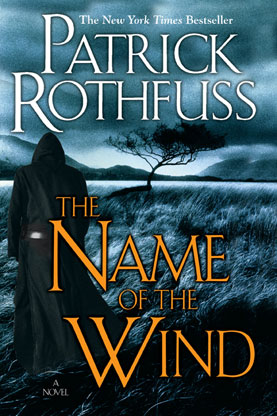
EL NOMBRE DEL VIENTO de Patrick Rothfuss

Título Original: The Name of the Wind 
Autor: Patrick Rothfuss 
País: E.E.U.U. 
Año: 2007

                                por Alex Lagos Padilla

El Nombre del Viento, como su título señala, es un susurro en la noche, una voz que describe los sueños de un bardo, los temores de un ladrón, la arrogancia de un mago y el coraje, de este.  Aquel que durmió con la muerte y regresó para contarlo, aquel que derrumbó imperios y dominó artes oscuras antes que siquiera fuera un hombre, quien a veces sería un salvador enviado por los cielos y otras un terrible asesino.  Es la historia de Kvothe el Sin-Sangre, Kvothe el Arcano, Kvothe el Asesino de Reyes, o como él prefiere, simplemente Kvothe.
 
Uno de los libros más atrapantes que he leído, enmarañado en una autobiografía narrada por una leyenda supuestamente muerta.  Una historia gentil y violenta, equilibrándose entre la alegría y la tristeza, el drama y la acción, una gran picardía que oculta un alma desesperada y herida.  Pues esto es Kvothe y mucho más.

Pero no haría justicia a este libro si tan solo alabara a su protagonista, pues mucha de su belleza radica en el mundo en que él desempeña su papel, un escenario complejo y maravilloso.  Tierras inexploradas ocultan  historias de reyes dementes, tribus monásticas que danzan como el viento, ciudades oscuras en donde solo las ratas y la escoria sobreviven, templos antiguos en donde criaturas fata, seres mágicos, merodean para jugar con los simples mortales. Bosques en  donde dragones devoran árboles y caminos transitados por dioses y demonios ocultos en piel de hombres

Así es como Patrick Rothfuss nos expone una trama compleja y sinuosa ocultándose en la aparente simpleza, otorgándonos personajes que serán amados y odiados, admirados e ignorados por igual. Pues Kvothe no suele estar solo por mucho tiempo, siendo así como este mundo fantástico se inunda con hechiceros dementes, sacerdotes corruptos y otros bondadosos, compañeros entrañables, amores increíbles y enemigos inesperados.  Una maraña de naturalezas se conjuga y brota en armonía, una tarea admirable de Rothfuss, pues la gama de personalidades es comparable con los escenarios y acontecimientos de esta obra. 

Para concluir, El Nombre del Viento, y su secuela, El Temor de un Hombre Sabio, son unos de aquellos libros que trascienden el tiempo y el espacio y por unos instantes nos hacen viajar y amar, añorar y odiar, todo esto en una leyenda capaz de quitar el aliento al más escéptico y derramar una lagrima de satisfacción en su culminación.  En pocas palabras, una obra increíble compañero para cualquier amante de las letras, y un recorrido apasionante para todos los demás.

Para considerar:
- El Temor de un Hombre Sabio, de Patrick Rothfuss. 

sábado, 15 de septiembre de 2012

LA ISLA BAJO EL MAR de Isabel Allende

Título: La Isla Bajo el Mar
Autor: Isabel Allende
Idioma: Español
Año: 2009


Me encantan los libros de Isabel Allende. ME ENCANTAN. Admito que no he leído todos, pero es una de mis autoras favoritas. He querido leer este libro desde que salió hace un par de años pero entre una cosa y otra se me escapaba. Ahora que lo terminé ME ENCANTA, y no esperaba menos.

La historia gira alrededor de Zarité, conocida como Teté. Nació esclava al llegar a la isla de Saint-Domingue (hoy conocida como Haití) a finales del s. XVIII. Fue comprada y educada por Violette Boisier para servir a Toulouse Valmorain, un francés rico dueño de una plantación de azúcar. Como ella misma lo dice, Zarité tuvo bastante suerte en su vida a pesar de ser una esclava. Obviamente nacer en la esclavitud es horrible y no tiene nada de buena suerte, pero a lo que se refiere es que no sufrió tanto como otros explotados en los cañaverales. Gracias a Violette, fue destinada a ser una esclava doméstica desde niña; la vida en los cañaverales era HORRIBLE.

La plantación de Valmorain no era la excepción. A pesar de que el hombre tenía ciertas nociones humanistas, Valmorain pecaba de ser un inepto de poco coraje que nunca se atrevió a hacerle caso a su precario sentido de la moral. Se hacia la vista gorda y se limitaba a incomodarse cuando su capataz hacia atrocidades con sus esclavos. Creía que como no era él quien las hacía, se libraba de toda culpa. Y como a su alrededor había gente que era barbárica, se creía bondadoso y piadoso por tratar con menos violencia a sus esclavos. Por eso, no veía como crimen violar a Teté y a otras esclavas.

Zarité no era una mujer de carácter ni de osada valentía o inteligencia pero era una mujer con sentido común, con un amor enorme por la vida y por sus seres queridos y mucha astucia en el trato con las personas. Supo jugar sus pocas cartas para conseguir la libertad, aunque demoró bastante en conseguirla ya que (en mi humilde opinión) las grandes decisiones en su vida siempre eran tomadas por otras personas, aún cuando era libre.

Hay muchísimos personajes en esta historia y todos afectan el destino de otros constante e insospechadamente. Eso es una de las cosas que más me gustan de Allende, me parece bastante realista. Aún así, Violette es mi personaje favorito. Es una mujer muy astuta y a la vez bondadosa. Peca de ser egoísta en sus intereses pero vela por los suyos. Violette aparece joven como una prostituta de alta sociedad que si bien al principio me cayó un poco pesada por ser tan vanidosa y ociosa, su practicidad para todo en la vida me pareció genial.

Más adelante, se casa y adopta al hijo de Teté y Valmorain sin saber quién era su madre. Valmorain, no queriendo hacerse cargo de un hijo bastardo, se lo mandó a arranchar de los brazos a Teté y se lo llevó a Violette. La mujer, su marido y su esclava Loula (quién era más su amiga y protectora que esclava) terminan queriendo al niño como suyo y eventualmente piden la legalización del trato en secreto. 

Violette era mulata pero aparentaba ser blanca. La verdad yo no entiendo bien cuándo la gente se considera mulata, mestiza, etc. Pero el libro dice que (y lo voy a citar) “Entre los mulatos libres o affranchis existían más de sesenta clasificaciones según el porcentaje de sangre blanca, que determinaba su nivel social.” Nunca llega a mencionarlos todos porque ni los mismos personajes los conocían ni sabían reconocer. Yo al principio no hacía mayor distinción en mi cabeza más que libres y esclavos pero en verdad el libro trata mucho de racismo y un par de veces tuve que rehacer la imagen que tenía en la cabeza de algunos personajes.

La esclavitud y el racismo tiñen cada palabra del libro y encuentras personajes que luchan arduamente contra ellos, especialmente contra la esclavitud. Entre los esclavos que se sublevaban (algunos de manera más admirable que otros) estaba Gambo, el primer y gran amor de Teté. A pesar de que nunca se dejaron de querer, ambos optaron por luchar por metas distintas: Gambo luchó por la abolición de la esclavitud y Teté por la vida y libertad de sus hijos. Para cuando Gambo pasó a ser una leyenda de la emancipación, Teté se encontraba en Nueva Orleans, al fin libre.

No todos los que luchaban por la igualdad eran esclavos. Maurice, el hijo legítimo de Valmorain con su primera esposa, era otro. Teté lo crió desde que nació y nunca conoció a otra madre; ni tampoco a otra hermana más que Rosette, la segunda hija de Teté y Valmorain. Se enamoraron desde pequeños y, hasta donde quedó el libro, nunca dejaron de quererse, a pesar de ser medio hermanos.

Sin embargo esa unión nunca me agradó, no solo porque era incestuosa si no que Rosette me cayó pésimo hasta casi el final del libro. Era imprudente, orgullosa y mandona con Maurice, quien a su vez era llorón y mimado. Ambos eran mimados. No fue hasta que la segunda esposa de Valmorain, que me caía aún peor, le hizo un desaire que comprendí que Rosette pecaba de ser demasiado segura de sí misma, y eso era algo que no se podía refregar en la cara de todos ni lucir abiertamente en su situación. Era muy injusto, pero así era. Y justo cuando lo comprendí y me congracié con ella… por primera vez en su vida puso los pies en la tierra y le pasaron mil desgracias.

El libro habla de la esclavitud y el racismo en sus antiguas escalas gigantes y te hace reflexionar sobre cómo hoy en día, si bien ya no es tan grande como antes, lamentablemente aún existe y no distingue razas ni edades. Y aunque no está a la vista de muchos, en verdad no pasa tan lejos de uno...

Otra cosa en la que me hizo pensar y me sentí recontra tonta por nunca haberlo hecho antes fue el azúcar. El boom del azúcar hizo que la esclavitud se eleve a magnitudes nunca antes vistas. La gente en África era raptada de sus casas y sus familias y embarcadas a América, Asia o Europa. Millones murieron en el camino y otros más en las plantaciones. En verdad es digno de una película de terror... y todo por el azúcar. AZÚCAR. Algo que hoy en día nos parece tan trivial y doméstico. Jamás me había preguntado sobre la historia del azúcar ni imaginado como era antes de que su uso fuera tan común (antes endulzaban con miel, jiji).

Buenísimo el libro, y no esperaba menos.

Para considerar:
- La Casa de los Espíritus, de Isabel Allende.
- The House of the Spirits, dirigida por Bille August (1993).
- The Help, dirigida por Tate Taylor (2011). 
- The Secret Life of Bees, de Sue Monk Kidd.

jueves, 30 de agosto de 2012

THE GIRL WHO CHASED THE MOON by Sarah Addison Allen


Title: The Girl Who Chased the Moon
Author: Sarah Addison Allen
Country: U.S.A.
Year: 2010

After reading The Sugar Queen I decided I wanted to try other books by Sarah Addison Allen; I chose this one because I liked the girly cover the sample was really cool. It’s a romantic, magical realism novel, which is characteristic of the author. I like it, I think she's a good writer but this book has two parallel stories that could easily not be related. One is really good, the other is... not.

This is the tale of two women. The first is Emily, a recently orphaned teenager who moves to Mullaby, North Carolina to live with her grandfather. The other is Julia, who has moved back to Mullaby to take care of her father's business and hopes to go back to her normal life in Baltimore soon. Julia will have to face her own past to settle matters she thought she had already left behind while Emily will have to deal with her mother's past, one which will make a whole town judge her without her knowing.

Emily and Julia become friends from the beginning and share a lot together, but neither of them is crucial in the other's story. I loved Julia's tale, but Emily's tasted a bit too much of paranormal teen romance. It's not that bad, really, but I'm gonna let myself whine and rant this off my chest.

There were too many fantastic elements surrounding Win, the guy Emily ultimately gets with. Yes, yes, it's called magical realism for a reason, but there was too much magic and not enough credible human reactions (Let's lock ourselves up in a closet so you can see me glow in the dark-Okay!). Yet, it was not the magic what bothered me the most, it was the constant similarities with certain series of popular books that made me want to slap the author book shut (someone's been reading too much Twilight).

First off, there's Emily's passiveness in reaction to everything. I understand she's the new girl in town who wants to blend in, so I didn't let that bother me, but then lo and behold! Paranormal Boy appears. This boy, Win, posseses a lot of information Emily desperately needs, but he denies it to her even though he tells her he knows a big deal about Emily's mother. Not only that, he flaunts it in her face, claiming they have a history together she can't even begin to imagine. And then he disappears, as misteriously as he arrived.

Later on, as Emily finds out Dulcie (her mother) was a cruel person who shamelessly led Win's uncle to suicide, Win finally gives her a detailed version of the story and points out how his family hates Dulcie and now that she's dead they hate Emily as well. Yet, he does not blame Emily for her mother's sins and agrees to be friends with her. But being friends is not enough, because a supernatural, overwhelming and uncontrollable force attracts the two of them, making them say and do things they never thought they would. No, it's not just love. Love is for ordinary humans and Win is no ordinary human, bitchplease, he glows in the dark. Actually, he glows under the moonlight, thanks to a genetic feature passed down for generations in his family. And to top things off, there are no ghosts in Emily's bedroom, that's just Win stalking watching her sleep at night. Ugh.

Ok, ok, maybe it's not that bad... truth to be told it's a nice story with enough drama to be credible and enough amount of fantasy not to make it OVERLY extraordinary. Plus it has an uncomplicated, rational ending with a twist that made me smile

On the other hand, Julia's story rocks and is completely different.

Julia is determined, hardworking and tough as nails. But she was not always like that, Mullaby remembers her past as as a moody, troubled teenager that had to leave for a reformatory because of self-destructive behaviour (though that's not the official story). What I like about Julia is that no fairy godmother changed her into who she is with the flick of a wand, it took her years of therapy to get her there and she says so herself.

But even now, there are parts of her past that she eventually can't keep ignoring and put her in a vulnerable situation, one of which is Sawyer.

Now Sawyer is a confident, proud and charming young man the term "archetype of southern men" describes well. (Note: Southern as in from the southern states of U.S.A.) He's extremely cavalier and I love him for that. And I guess so does Julia. They are just meant for each other, you can just picture him holding her still while she whines and throws her tantrum- cause she’s learned to show her anger and emotions a little too well in therapy.

Sawyer was Julia's high school crush. Back then she thought  he could save her but she learned the hard way that only herself should carry the weight of her future. She has to save herself.

Both characters changed in the years apart, Julia learned through tough personal experience and Sawyer... just grew up. This is a big theme in the book: change. The reason why Emily couldn't believe her mother had been such a horrible person so long ago was because she had known a competely different Dulcie. Emily's mother was a selfless, devoted woman who fought for making the world a better place, whereas Dulcie the teenager was a selfish, spoiled, cruel girl.

Other themes are forgiveness, prejudice and redemption. Other characters are Stella and Hollly, who may have been mean back in school, hanging out with Dulcie, but that doesn’t make them evil. Julia herself couldn't believe how Stella was so eager to become friends with her and help her out- in her own way.

Even though Emily gives Sawyer and Julia something in common to care for, she is not a crucial puzzle piece for their getting together. Julia's story is strong and awesome by itself and, in my humble opinion, the main one- she's the girl who chases the moon afterall, which, as she told Sawyer, stands for happiness. Although you could say the moon is Win and Emily chases him but oh well.

More than a tale of two women, this book could be the tale of a town, bringing together two (or more) women. All in all, thumbs up for this one!

Other books by Sarah Addison Allen:

- Garden Spells
- The Sugar Queen
- The Peach Keeper

domingo, 5 de agosto de 2012

DOG SENSE by John Bradshaw

Title: Dog Sense
Author: John Bradshaw
Language: English
Year: 2011

This one's giving me a hard time... and by that I mean I haven't finished it yet. But since this is no novel and has no plot, I feel I can write a review now.

The book's about dog behaviour and (partly) dog training. It has a very different approach compared to most showed and employed by popular trainers (it specifically points out and criticizes Cesar Millan).

There's not much to say about the contents (unless I summarize the whole book). Bradshaw enlightens you on dog behaviour history and current beliefs (his beliefs, at least). It has very useful information but I gotta point out there are different opinions on the subject. No matter how many Ph.Ds the author has, Bradshaw's point of view is only one... a good, solid one, but still.

The information provided in the book is very interesting, but the author's writing skills (and his editor's work) are awful. The guy keeps going around the same idea over and over again, making it an exasperating read. It's not that it's unclear, it's just redundant, he repeats the same information so much that I get bored and eventually put the book aside and not pick it up again for a few days.


To consider:
- Animals in Translation, by Temple Grandin and Catherine Johnson
- Animals Makes Us Human, by Temple Grandin and Catherine Johnson
- Tell Me Where it Hurts, by Nick Trout
- We Bought a Zoo, Bejamin Mee
- The Rhino with Glue-on Shoes, Ted Y. Mashima

sábado, 30 de junio de 2012

THE SUGAR QUEEN de Sarah Addison Allen

Title: The Sugar Queen
Author: Sarah Addison Allen
Country: USA
Year: 2008

I was at a family birthday party when I saw this book on a coffee table. I looked at it and smiled at the title, which was enough for my auntie to shove it into my hands and tell me I was gonna love it and I should totally read it. She has a good taste in books, but the cover made it clear it was a story a tad more romantic than my usual read. Still, I took it.

And it was a good choice.

The Sugar Queen is the story of 27-year-old Josie Cirrini as she steps out of her hiding place (a candy-filled, oversized closet) and embraces life. Or, rather than embracing, bullrushes life into unconsciousness. Blackmailed by a fugitive that finds sanctuary in her closet, she is forced to sneak out of home, comfort newly-found friends and get her crush into a fist fight. In the process, she unveils many secrets about her family, which turned out to be bigger and more complex than she thought, and finds the confidence in herself to accept that life is what you make it be.

In the beginning, Josie spent her days driving Margaret, her cold superficial mother, around their small North Carolina town and running errands for her. Mr. Cirrini had left Josie and Margaret enough money (and fame) to live comfortably without having to work, but all Josie could do was please Margaret's desires during the day and find comfort in sweets, romance novels and travel magazines at night. She was not a happy woman, but Josie felt she owed Margaret as much for being a difficult child. I don't quite agree with that "guilt" that submits her into building her life around her mother, but I let it pass. Specially because it all changes pretty fast.

One joyous autumn morning, Della Lee Baker makes her way into Josie's life and declares siege on her beloved closet for an indefinite period of time. This event propels the many changes in Josie's life, such as meeting Chloe Finley, a modest and heartbroken sandwich-maker. Josie amazes herself (and others) when she finds in herself the strength and courage (and wit) to stand up for Chloe the way she had never stood up for herself. As the two become friends, Chloe leads Josie to Adam, a handsome postman and Josie's longtime crush.

The story beautifully knits together all of the character's past and present, whether pushing some together for the first time or pulling back some others as many secrets come out of the dark. Even Margaret will be reunited with a past she had long forsaken. One of the messages you can gather from the story is that it's never too late to start living the life you desire.That was plain to see from the beginning: I liked the fact that the main character was 27, not a flimsy teenager (and also it ruled out high school romances and teenage drama).

I should have mentioned this earlier, but here it is now: Sarah Addison Allen writes magical realism. This was the second time I read magical realism in English and I have decided that I like it (and I forgive it for not being in Spanish). This author does a great job, but I gotta say that her brush paints a much tender version of it (compared to Latin American magical realism).

At the end of the day, though, I'd read this book again and I'm definitely reading more books by this author very soon.

To consider:
- Garden Spells, by Sarah Addison Allen
- The Girl Who Chased the Moon, by Sarah Addison Allen
- The Peach Keeper, by Sarah Addison Allen
- The Thirteenth Tale, by Diane Setterfield